



Spaces typically evolve over time through changing user needs and patterns of occupation. The INS 9 Canteen renovation began by observing this shift.
Open areas support collective use. Semi-defined zones encourage informal discussion and collaboration. More enclosed moments provide opportunities for privacy, focus, and retreat.
Originally functioning as a dining area, the space had gradually taken on additional roles — informal meetings, conversations, moments of pause, and social interaction. However, as these activities accumulated, the lack of spatial definition resulted in a chaotic visual and functional experience, reflecting the unsorted dynamics of everyday use.
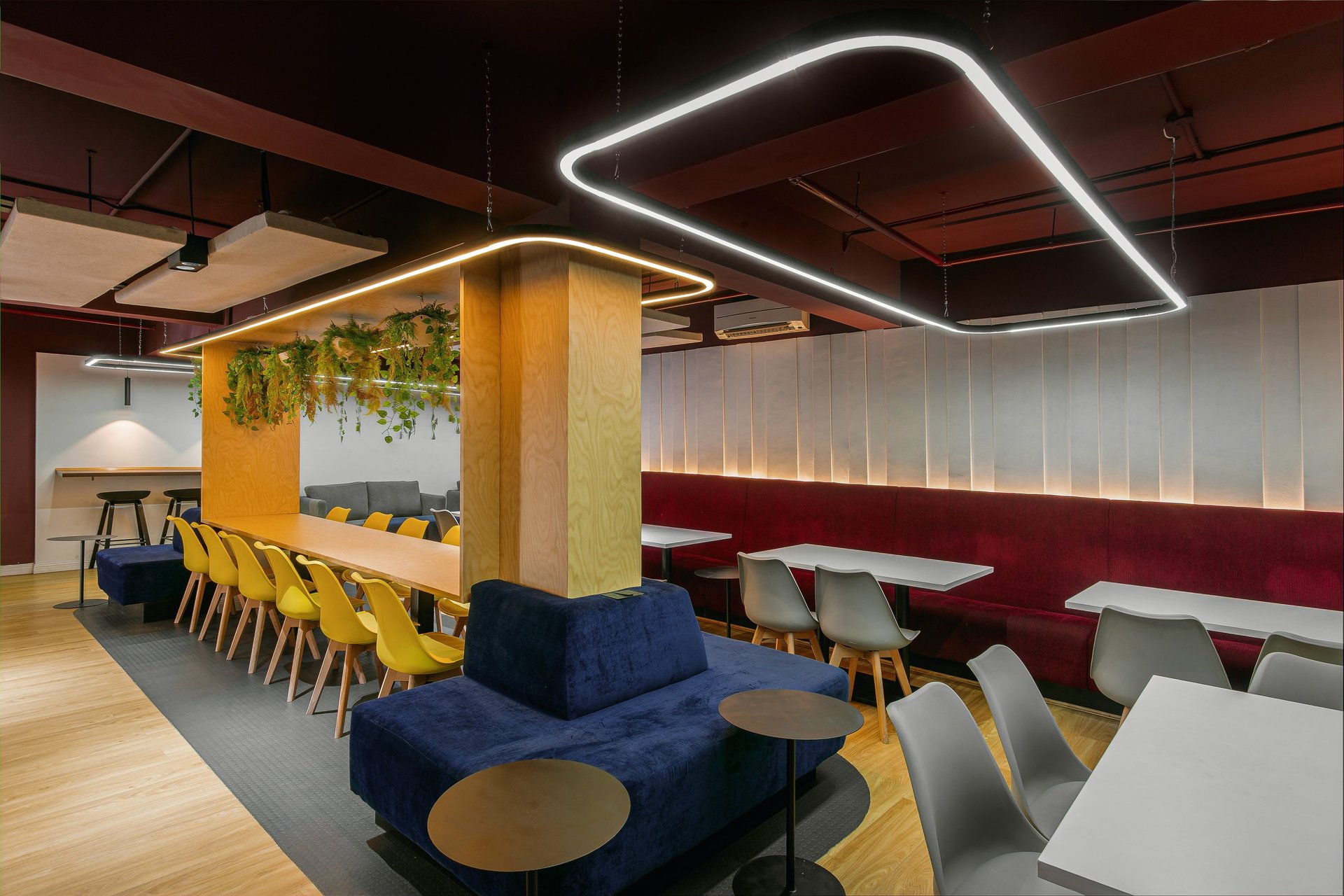
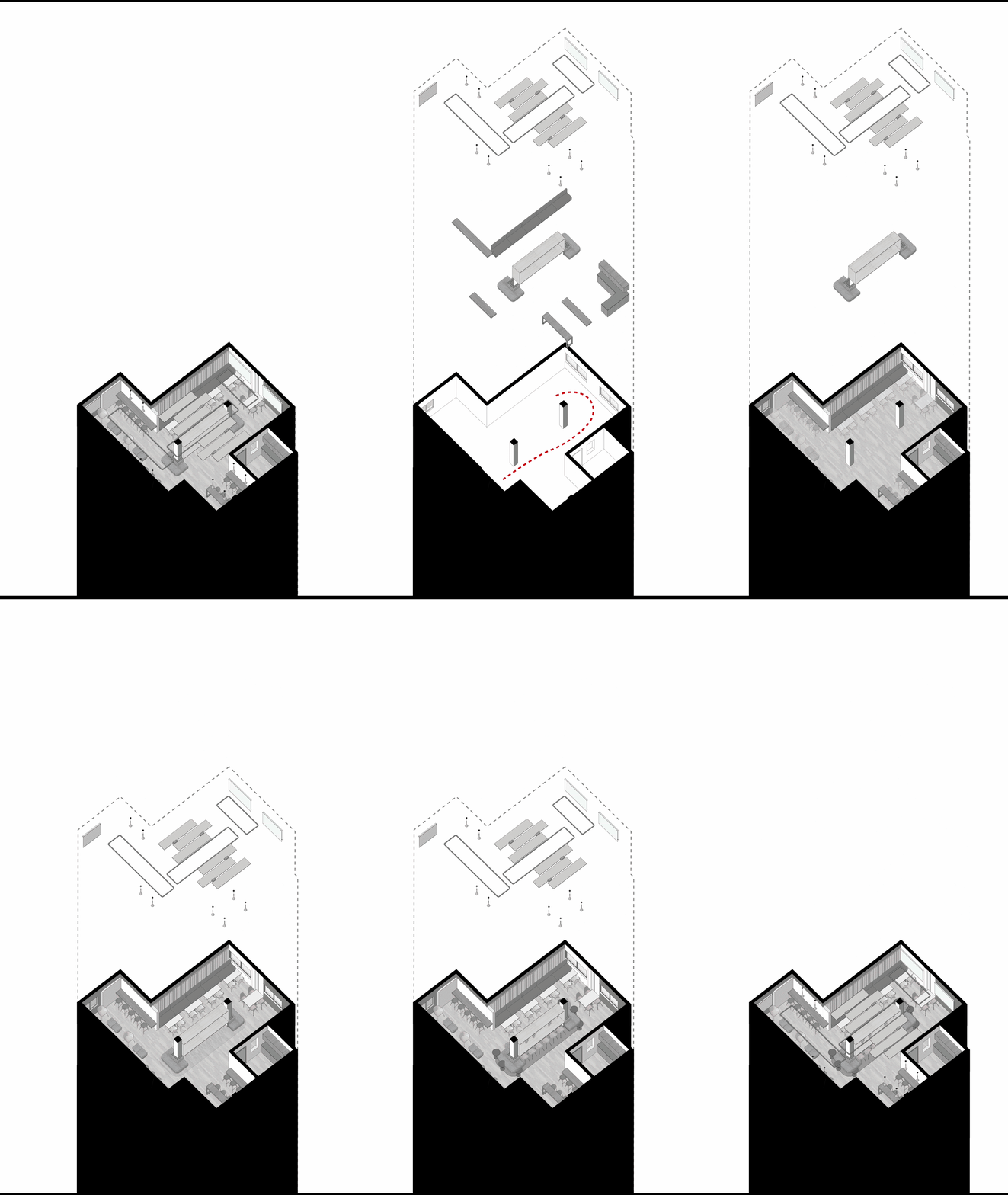
The response was to introduce subtle spatial boundaries that guide behaviour while preserving openness. Through arrangement, material transitions, furniture placement, and overhead elements, the redesign creates varying levels of privacy and engagement without fragmenting the space.
The transformation expanded the role of the canteen beyond its original function. It evolved from a place primarily associated with meals into a more versatile environment for connection, collaboration, and user choice.
Good design does not always require replacing what exists. Sometimes it requires understanding what has already emerged and creating the conditions for it to perform better.
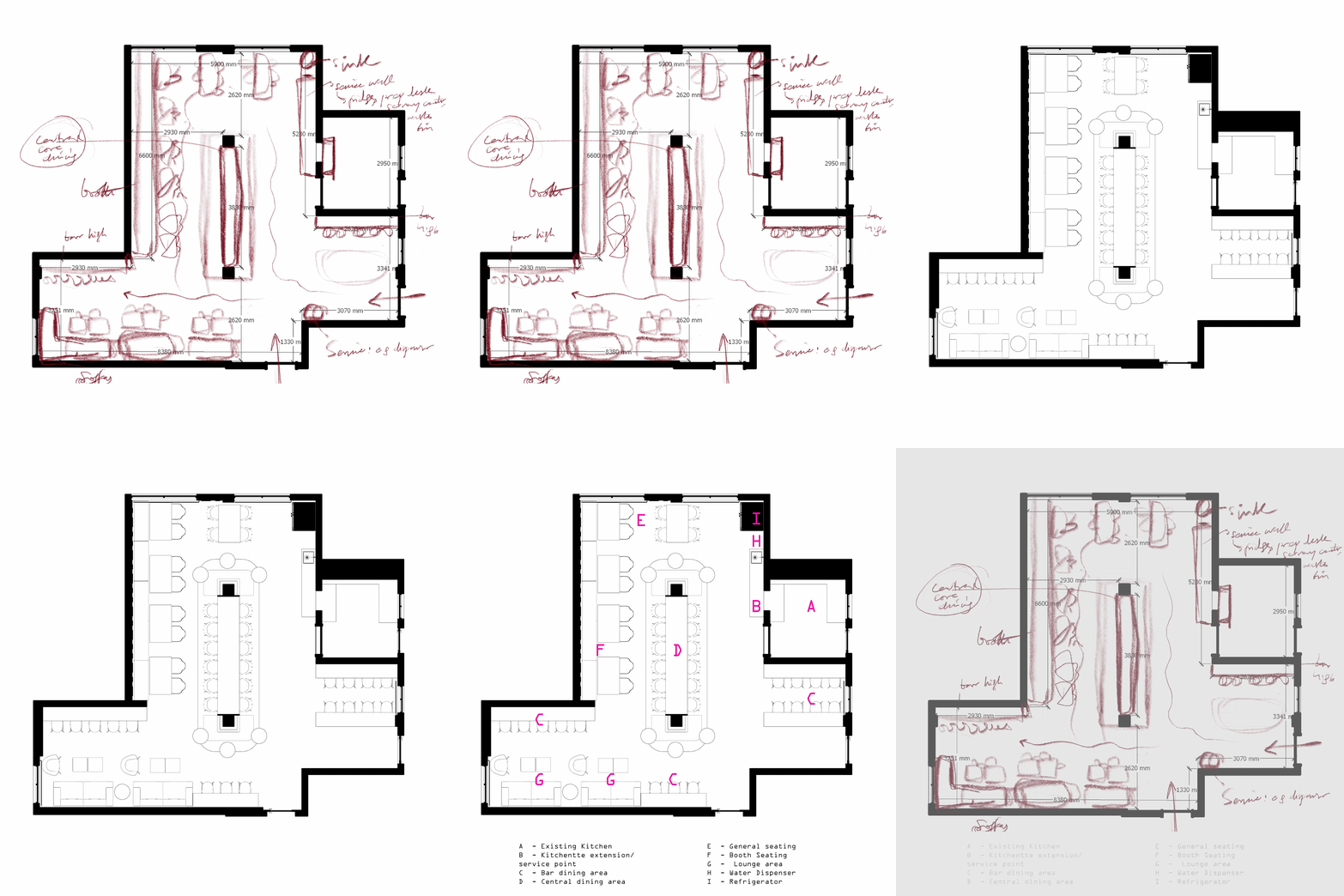
A key challenge was the presence of two centrally positioned structural columns that limited spatial flexibility. Instead of treating them as obstacles, they became the anchor for the new spatial organization. A central dining zone was established around them, allowing the columns to define the hierarchy of the surrounding spaces.
Drywall Contractor: CID
Masonry: Ezekiel
Wall Finishes: PaintXpression
Floor Finishes: Nathaniel
Electrical Contractor: Samfun Tech
Plumbing Contractor: Oladapo Plumbing Works
Millwork Contractor: Bamabork Ventures
Metalwork Contractor: Mohaziz Metal
Executed by: dbq studio
Architectural Photography: Mujib Ojeifo
Design/Project Lead: Quadri Sorunke
Project Supervisor: Benedict Borisade
Project Manager: Aisha Sorunke